The Music of David Salminen

COSMIC SYMMETRIES – free fall concert – piano improvisations
David Salminen – Saturday, 3 pm – November 16, 2013

Portland Piano Company, 711 SW 14th Ave , Portland , OR 97205
http://www.portlandpianocompany.com

Music can be beautiful – that’s certainly one of the things sought in the concert experience. But there are also other benefits associated with the invited serendipity of this kind of concert… flights of fancy without a defining program… an escape from society’s constant reminders of who we are conditioned to be (an escape which can, paradoxically, improve our memories)… and a sense of wholeness, that emerges in the cosmic musical experience like a healing balm, against the ubiquitous modern complaint of feeling scattered.

Salminen’s music “contains the very spark of life, and the listeners catch that spark.” Julia Sopalski, For The Times

for more information, phone: 503.762.6387  – or email: davidasalminen@yahoo.com

COSMIC SYMMETRIES – free fall concert – piano improvisations

David Salminen

Saturday, 3 pm – November 16, 2013

Portland Piano Company, 711 SW 14th Ave.  Portland, OR 97205

Among the benefits of music especially associated with this type of concert are:

1) the facilitation of flights of fancy without a defining program or form, 2) an escape from our society’s constant reminders of who we are conditioned to be (an escape which can, paradoxically, improve our memories), and 3) the evocation of a sense of wholeness, that emerges in the cosmic musical experience like a healing balm, against the ubiquitous modern complaint of feeling scattered.

Salminen’s music “contains the very spark of life, and the listeners catch that spark.”     Julia Sopalski, For The Times

for more information, phone 503.762.6387, or visit

https://davidsalminen.com/music/  (includes recordings)

https://www.facebook.com/pages/David-Salminen-cosmic-improvisations/125096377595660?ref=hl

http://www.portlandpianocompany.com

Image

the duration of a life

The results of a life-work are tangible in art… but there is something also that lasts, of the work itself, regardless of the result, in the invisible world… potentials build up, even if the particular creator doesn’t get “the credit”. Humanity is one, and one with all life on this planet, for that matter. Something about being around an old tree can awaken a feeling for this in some people, and there are of course many other ways, to awaken our sense of being part of a very old & ongoing project.

Found on YouTube: various performances of the “Song of the Fisher Women” – composed by the collaborative team George Gurdjieff & Thomas de Hartmann – various renditions including solo piano (but not mine), and chamber orchestra. Back in the early 1970’s, when I was at school in England, this Oriental-flavored “Song of the Fisher Women” was one of my favorite discoveries… I played the solo piano version over and over again, in practice and also for others, for a number of years, along with dozens of other favorites out of the 200 or so published pieces in the Gurdjieff – de Hartmann musical literature, before I became primarily an improvisatore. Composed in the 1920’s – these eight or so volumes of music created by the seeker-traveler and mystic philosopher George Gurdjieff (1866? – 1949), with the help of the Russian-trained pianist-composer Thomas de Hartmann (1885-1956), are unique in their quiet, almost minimalist fusion of east – west musicality. Hartmann’s own music, both before and after his work with Gurdjieff, is much different. Years later, the Hartmann’s wrote a memoir about their adventures with Gurdjieff, during and after the Russian Revolution. It’s a spell-binding book, and still in print. How they got out of Russia, as aristocrats travelling through disputed, war-torn areas of the old empire, in 1917-18, was quite an adventure, indeed. In later years, Thomas’ widow, Olga, lived in Santa Fe, New Mexico until her death in 1979. I had the privilege of corresponding with her for a few years, and also of meeting her for a rich hour’s worth of conversation, on New Year’s Day, 1978. Her perspective on life was very challenging – all about the sacredness of one’s own experience. During our visit, aside from talking about her husband’s music, and playing a tape excerpt for me of his opera Esther, she was emphatic about trusting “inner voice and wish” as the only way to live, and gave examples from her own life experiences. In order to really learn, in order to do the right thing, she said, you must “fight your teacher”. She and her husband Thomas had regarded Gurdjieff as a spiritual teacher worth trusting with their very lives, especially during the time of the Russian Revolution, but the relationships were far from passive. It seems probable to me that most people who have a “spiritual teacher” do not have that kind of collaborative relationship, and thus miss out on much if not most of what they could get from their time spent together…

One of my longtime most favorite quotations concerning work – in honor of the American Labor Day Weekend: In his book, The Masters of Wisdom, J.G. Bennett wrote that… “At the time of the Mongol invasion, the Grand Master [of the Central Asian Sufi’s known as the Khwajagan] was Khwaja Arif Riwgarawi. Riwgara was a village about twenty miles from Bukhara. According to a popular legend Chinghis Khan stopped in Riwgara before beginning the siege of Bukhara. Most of the population had fled, but Khwaja Arif remained and was seen working at a loom of his own invention. Chinghis Khan was impressed by his tranquil demeanor and by the skill with which he worked. He asked through an interpreter for an explanation. Khwaja Arif replied: ‘My outer attention is on my work and my inner attention is on the Truth; I have no time to notice what is happening in the world around me.’ Chinghis Khan was so pleased with this reply that he ordered the inhabitants of Riwgara should be left in peace…” The fate of Bukhara was not so benign: “The siege of Bukhara was over in a week and the Mongols entered the city on the 10th February 1220. The citadel held out for another twelve days and all the defenders were killed…” In other places, the ability to maintain an inner tranquility in the midst of the hubbub, and while engaged in outer activity, has been described as “solitude in the crowd”. I suspect that having such a skill could even have benefit in today’s world!  So – If any of my friends are experimenting along these lines, I hope they will communicate – we can exchange observations, etc.

Many and heartfelt thanks to all the folks who came out to the concert yesterday, to listen for the echoes of an intuition of the tunes and harmonies and rhythms of the imaginal world beyond habitual or customary patterns of avoidance… And much gratitude also to the Portland Piano Company, who provided a Fazioli concert grand piano for the occasion that was wildly fabulous beyond any reasonable expectations one might have about pianos. The tonal responsiveness of the instrument was out of this world, which helped to enhance the experience we were going for… 

To fellow soundcurrent travelers: I am really looking forward to creating music on July, 21, 2013 and to spending time with other people who can identify with being “a very strange kind of person” – in the spirit and sense of Thomas Merton’s words – seeking to be “deliberately irrelevant”, that is, people who “live with an ingrained irrelevance which is proper” in light of “the basic irrelevance of the human condition, an irrelevance which is manifested above all by the fact of death. The marginal person, the monk, the displaced person, the prisoner, all these people live in the presence of death, which calls into question the meaning of life.” (these quotations come from Thomas Merton’s book ASIAN JOURNAL, copyright 1968 – and I can’t recommend the book highly enough, as a spiritual diary still apropos to our time)

An open invitation to David Salminen’s July 21, 2013 concert:

The Zone of Avoidance

– original piano music – inspired by astronomy –

– riding different waveforms, embracing the whole –

Sunday, 2 pm, July 21, 2013Portland Piano Company 

711 SW 14th Ave in Portland, Oregon 97205  phone 503.775.2480

https://maps.google.com/maps?f=q&source=s_q&hl=en&geocode=&q=711+SW+14th+Ave.+Portland+97205

Admission is on a “pay what you want” basis. Always evolving, the music David manifests is dedicated toward the harmonious development of all. Please share this invitation with friends.

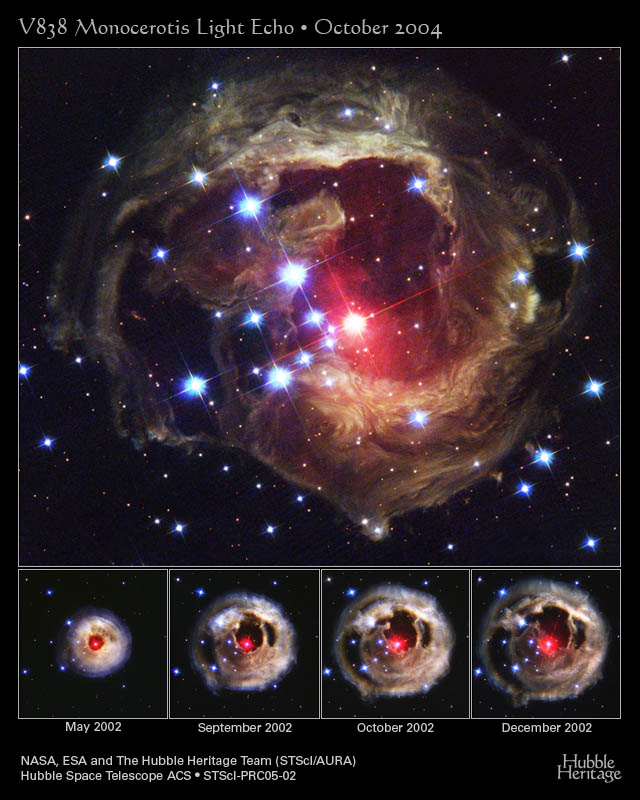
The “Zone of Avoidance” – or ZoA – is an astronomy term coined by the great scientist Edwin Hubble, after whom NASA’s famous & awe-inspiring space-based Hubble telescope is named. For many years, optical astronomers avoided looking into or across our Milky Way’s galactic equator, because of the obscuring effects of interstellar dust. Efforts were better spent looking elsewhere – anywhere else – than directly across the galaxy and into the ZoA! http://astronomy.swin.edu.au/cosmos/Z/Zone+Of+Avoidance

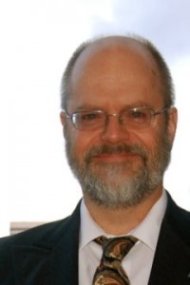
 David Salminen, pianist – in concert

“The Zone of Avoidance”

(cosmic improvisations)
Image

(photo by Christopher Vardas)

Sunday, July 21, 2013 at 2 pm

Portland Piano Company

711 SW 14th Ave in Portland, Oregon 97205

http://www.portlandpianocompany.com       phone 503.775.2480

Admission: this event is offered to the public, on a “pay what you want”  basis.

The “Zone of Avoidance” – or ZoA – is a term coined by the astronomer Edwin Hubble, after whom NASA’s famous & awe-inspiring space-based Hubble telescope is named. For many years, optical astronomers avoided looking into or across our Milky Way’s galactic equator, because of the obscuring effects of interstellar dust. Early optical “efforts” were better spent looking elsewhere – anywhere else – than directly into the ZoA!

However, in recent years, it has become possible for us – embedded though we are on a spiral-arm of the Milky Way galaxy – to finally look straight into & through the ZoA, using innovations like radio astronomy and infra-red imaging. At the right wavelengths, the visually opaque galactic plane becomes transparent, and the ZoA changes into whole new realms of interest and possibility!

http://astronomy.swin.edu.au/cosmos/Z/Zone+Of+Avoidance

Artistically, the “avoidance” notion is a veritable cornucopia of metaphor. So much of the world we live in seems opaque to us… yet it can be very productive to turn our attention toward our own private “ZoA’s”, looking with different eyes. In another metaphor, to be really experiencing the flow of music is an ever fresh and by definition “harmonious” way to explore perceptions.

Always evolving, the music David manifests comes out of long experience in cultivating the mutual benefits to both performer and audience in putting attention on the creative process in music, rather than the roles of  “presenting” something or “receiving” something. The traditional roles of performer and audience are still there, of course, but the aim is to activate another dimension of appreciation – the spontaneous element in all art. In any event – in all forms of music presentation – it can be postulated that there are still the same three creative elements: an expressive manifestation through an artist – the attention and inner life “river rafting” of listeners – and the ineffable mystery of music itself.

Salminen’s education in classical music included: the David Hochstein Music School in Rochester, NY (Louise Young, Chuck Mangione); Clark University in Worcester, Mass (Relly Raffman, Wesley Fuller); the Sherborne Academy in England (J.G. & Elizabeth Bennett, Anthony Hodgson, et al.); and the University of Alaska (Jean-Paul Billaud, Dean Epperson). Another major influence was Vipassana meditation training with The Ven. Vira “Bhante” Dharmawara.

Transition: In 1979, after twenty years of classical training, David’s connection with music began to change. His emerging knack for improvisation brought him into new musical situations with dancers and singers & also with meditative musical healing – a dynamically audible working through and re-blending of the energies of experience. This work – or play – has led to many concerts over the past 30-odd years, of extemporized music exploring extra-musical themes – often cosmic in nature. Combined with guidance in music appreciation, this format fosters a creative blending of the known with the unexpected…  so much so, in fact, that people coming to David’s concerts often find that afterwards they hear anew the joyousness of other music – both live and recorded.

Music recordings, videos, blog, etc. https://davidsalminen.com/music/

More videos: https://vimeo.com/davidsalminen

For more information: phone (503) 762-6387     email david@wholeworks.net

Salminen’s music “contains the very spark of life, and the listeners catch that spark.”      Julia Sopalski, The Anchorage Times

Salminen “uses his rather unconventional methods to create [music] bursting with life, feeling, and spectral intensity.”                   Metro Magazine, Anchorage, Alaska
“I constantly have three treasures; Hold onto them and treasure them. The first is compassion; The second is frugality; And the  third is not presuming to be at the forefront in the world. Now, it’s because I’m compassionate that I therefore can be courageous; And it’s because I’m frugal that I therefore can be magnanimous; And it’s because I don’t presume to be at the forefront in the world that I therefore can be the head of those with complete talent.”

Te-Tao Ching, Chapter 67. Translated by Robert G. Henricks from the Ma-wang-tui Texts. This is a most excellent translation. It incorporates the 1973 discovery, of early copies of Lao-Tzu’s classic, in the village of Ma-wang-tui in Hunan Province – published by Ballantine Books, 1989.