The free concert at 3 pm, Saturday, October 29, 2011 – “Into the Dark” – at the Sherman Clay Pianos recital hall in Portland feels quite imminent to me now. After all, it’s been coming together as a musical inspiration for about nine months, initiated really by a perhaps offhand comment from my friend Anthony Blake… but it is part of a much longer arc of creativity:
Beyond what I have written elsewhere, let me try to explain… I am on a long-term journey to create musical occasions in which we can get at something deeper than a “spectacle” or an “experience” – both of which are fine, as far as they go. I hold dear the ancient idea of music in various cultures. For instance, I relish the attitudes of the classical Greek culture, which held that “music is a moral law” (Plato) and the ancient Chinese, who expected the Emperor to “set the tone” – as a musical pitch, literally – for the coming year. I am most inspired, however, by a more modern approach as found for instance in Kepler, who was looking for a “harmony of the spheres” corresponding to the actual observational data that was being collected in his time – for the first time, as far as we know, in human history – about the movement of the planets. For much of my life, I myself have been looking at these things as metaphors for new kinds of self-perception for us as individuals and for even the human race as a whole. Years ago I read in a book by a particular musicologist who I greatly respect, about the usefulness of the Ptolemaic point of view (the earth is the center of all things, with various heavens or layers of reality above it) as an aid to meditation, as compared with the post-Copernican model, which is – according to some – less amenable for most of us as a metaphor or picture of spiritual unfolding. This bothered me; why should contemporary meditation or mysticism be dependent on outmoded models of the universe! I suppose that I have always been something of a mystic, but I am also the son of a scientist… and somehow, I have always, also by nature I guess, been looking for progress in mysticism that could be parallel to, and not divorced from, the development of the sciences of our time. These days, due to the immense progress being made “as we speak” in astrophysics and cosmology, much of it having to do with researches into the nature of gravity, and the application of what is called “gravitational lensing” – which has been poetically referred to now as “Einstein’s Telescope” *– there are whole new vistas of understanding and contemplation opening up that are just waiting for us to enter, to appreciate, and to share.
*”Einstein’s Telescope -the hunt for dark matter and dark energy in the universe” is the title of a fine book by Evalyn Gates
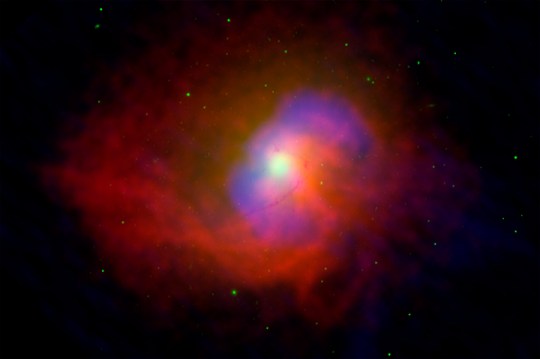 “The Efficiency of Black Holes, part 1” – This is from a live concert in Portland, Oregon, USA – recorded at the Sherman Clay recital hall, February 20, 2011. The title was inspired by a contemplation of the wonders of modern astronomical research that has revealed, for instance, that “The conversion of energy by matter falling toward a black hole is much more efficient than nuclear or fossil fuels.” More information on this mysterious aspect of black holes can be found at this NASA – Chandra – Harvard website: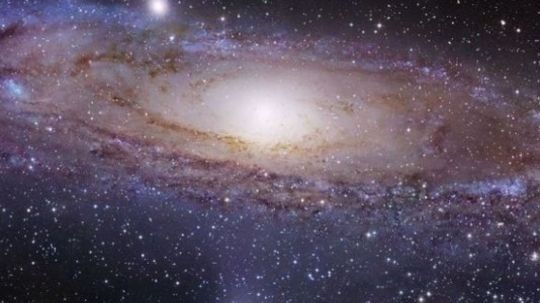
 David Salminen